Why has printed publications consistently been a focal point of censorship, and why is it treated as politically sensitive? Are the moral standards embedded in national publishing regulations truly neutral, or do they function as a shield through which certain forms of power become legitimized?
This project began from my personal experience: some fashion magazines and illustration books of girls I brought into China were classified as pornography and confiscated by the police because the images of women were considered “explicit.”
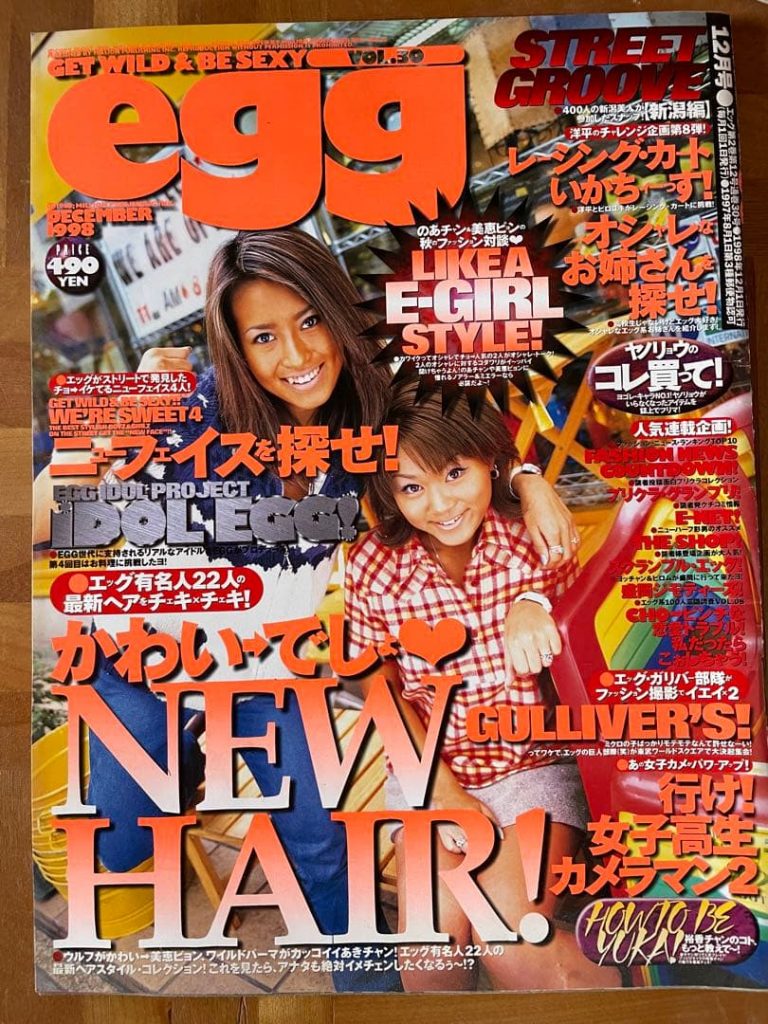
And, I was accused, judged, stigmatized, and “educated” in the name of obscenity. Four male officers in uniform examined my books page by page—and me as a person—and carried out this moral and political judgment. They even joked behind the desk.
That day, I kept asking myself: how did the male gaze become a form of justice here? Why did images of women—and I, as a woman—become the object of judgment? How did the male gaze come to act as an agent of the law, becoming the supposedly objective standard for judging women’s morality?
Such moral judgments seem not just limited to the censorship of media and publications, they have already permeated everyday life.
Through legal institutionalization, publishing appears to have become a site where patriarchal moral discipline—such as slut-shaming or ideals of female chastity—can be implemented through administrative systems in the name of justice. Yet at the same time, publishing itself can serve as a powerful tool to question and destabilize this system.
Starting from the censorship of bodily imagery in mainland China, I wanted to investigate the politics of publishing and questions the supposedly neutral moral standards embedded in regulatory frameworks—revealing how they reflect a male-centered perspective that judges and regulates the representation of women’s bodies.
<Reversing the Gaze>
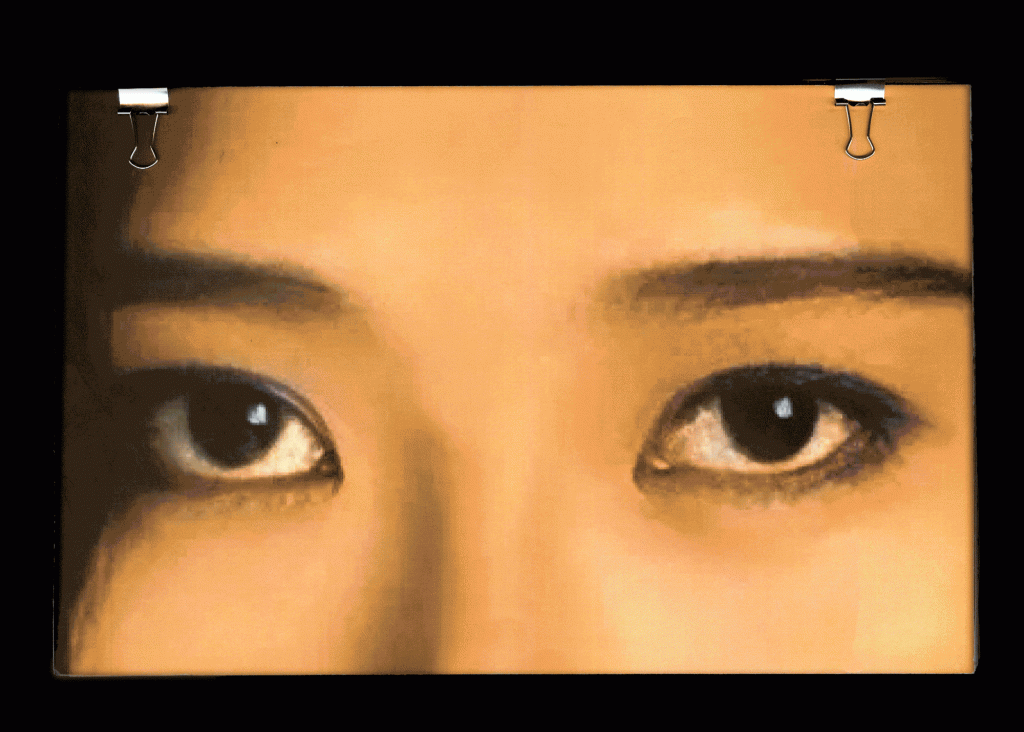
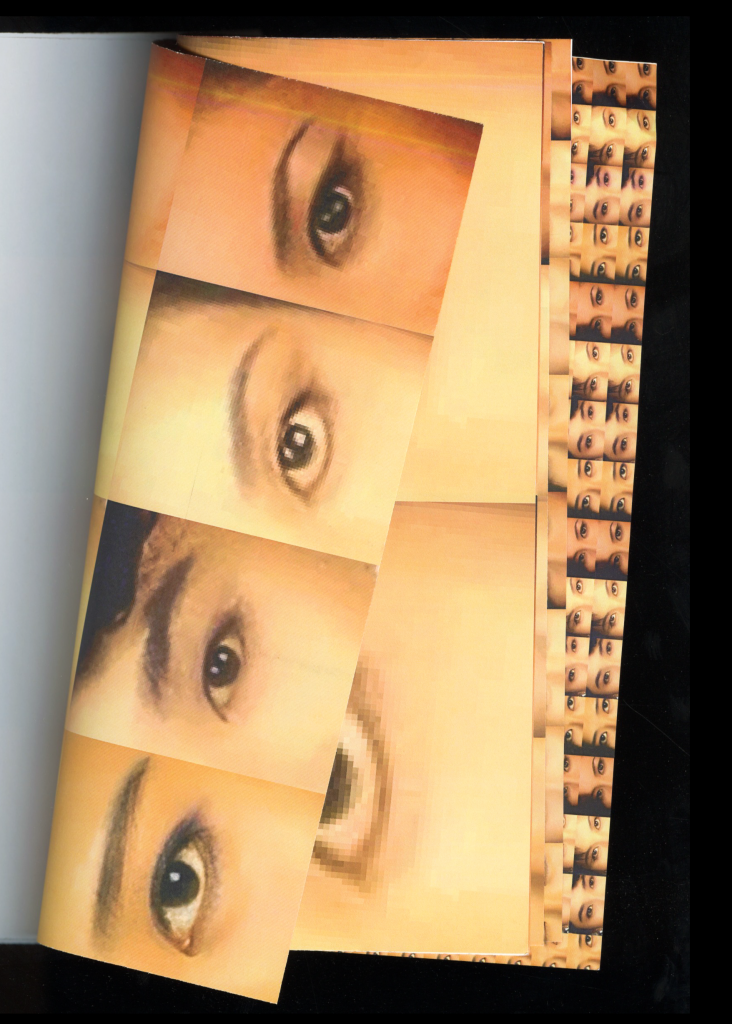
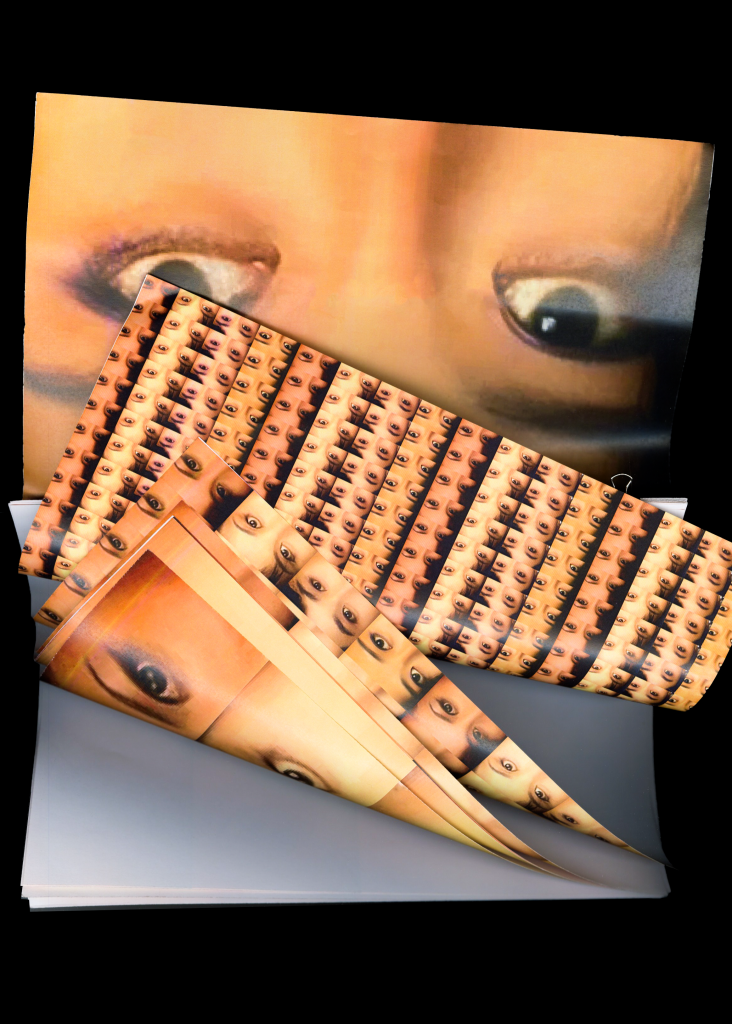
I cropped and enlarged the eyes of female characters from “Category III film” posters—such as Hidden Desire (1991) and Sex & Zen (1996)—isolating their gaze from images originally produced by and for the male gaze.
<Killer Angel>
Alternation of book Lessons for Women composed around 100-106 CE.
An excerpt from the book:
“What is womanly virtue? She does not distinguish herself in talent and intelligence. What is womanly speech? She does not sharpen her language and speech. What is womanly manner? She does not seek to be outwardly beautiful or ornamented. What is womanly merit? She does not outperform others in her skills and cleverness.”
Overlaying images and text is a common strategy used in China’s censorship system. In response, I collected images of female fighters from B-grade exploitation films and used them to cover texts saturated with patriarchal ideology—as a form of “reverse censorship.”
Images used are sourced from
“category III film” posters:
Killer Angel (1991)
Naked Killer (1992)
Prisoner Maria (1995)
The Metropolitan Police Branch 82 (1998)
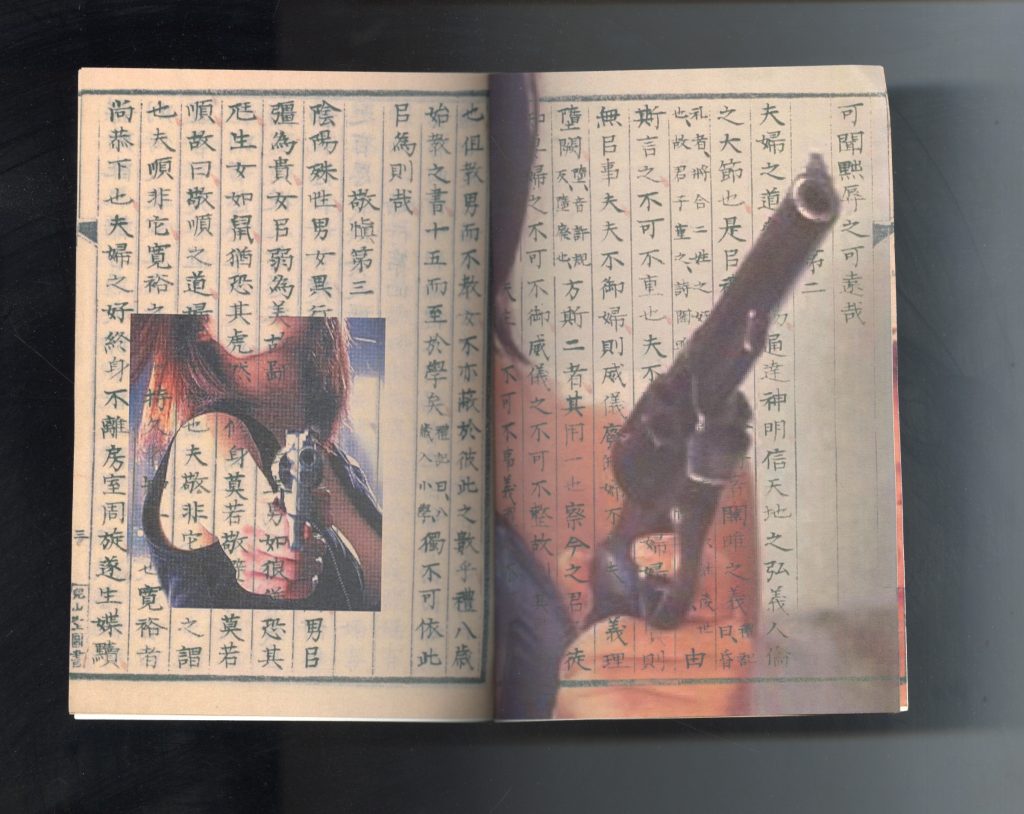
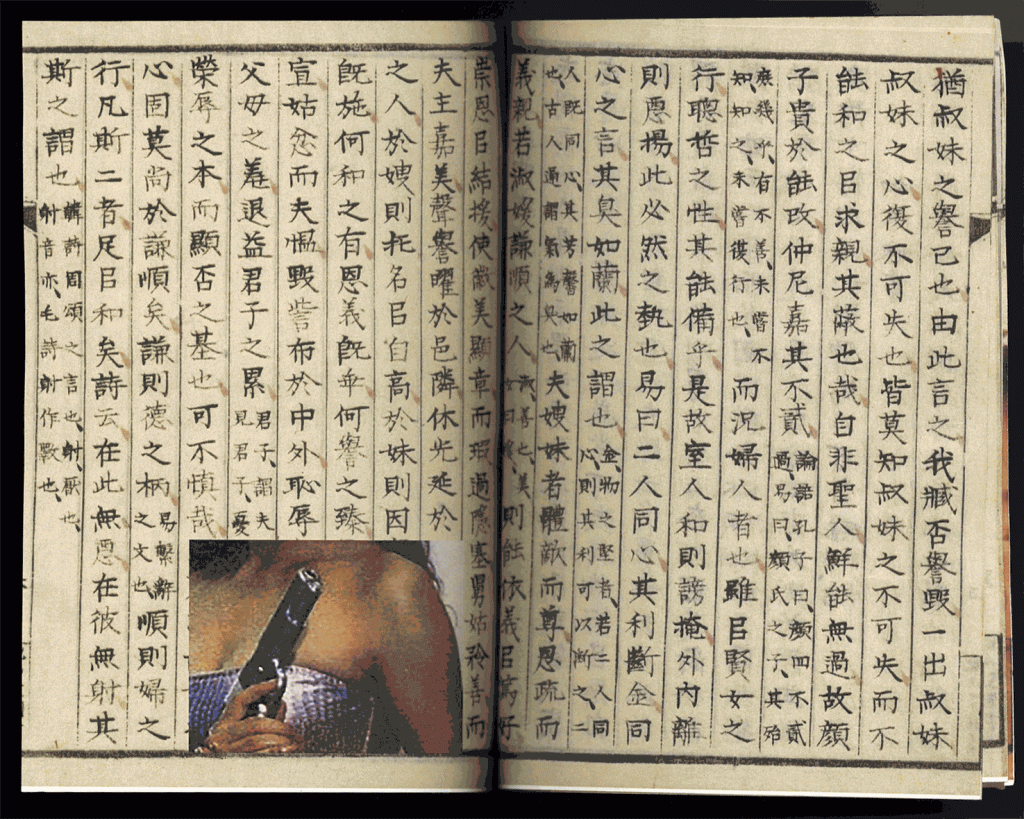
The guns in the images are pointing towards words of moral judgements (“virtues”, “ethic”, ““Humble”, “humiliating”, “disgraceful”, “lewd”, etc. ).
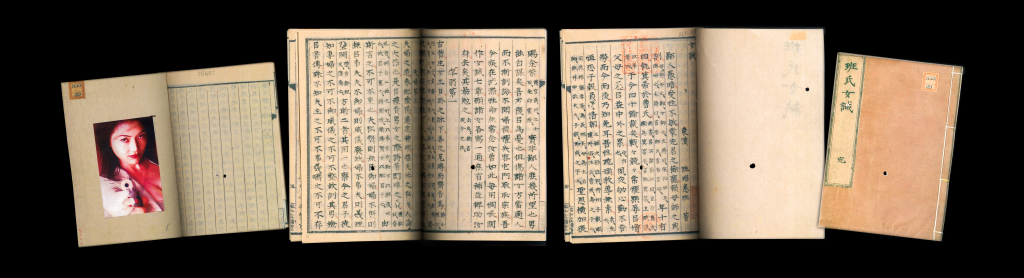
In another iteration, these words are punched with a hole puncher.
I first encountered one of these images in a second-hand bookstore: a girl wearing only a bra and shorts, holding a gun. The title read “Killer Angel.” The name felt striking—suggesting a kind of female power that was both violent and seductive. After research1, I found many Category III films in the 1990s featured similar female assassins. These characters were armed, powerful, and violent, yet they clearly produced through an objectifying gaze and served male desire. They embodied a contradiction: challenging conventional femininity while still existing within a patriarchal framework.
In this gesture, the images of the female killers are displaced from the mechanism of male desire. Though they “sacrifice themselves” in the process, they become warriors that wipe away the corrupt patriarchal discipline and moral regulation embedded in those texts.
- REFRAME (2021) Fatal & Fallen – Online Discussion. YouTube. Available at: https://www.youtube.com/watch?v=XY9TcEpNXzM ↩︎
Leave a Reply