Lovely Andrea, Hito Steyerl
This fascinating work by Steyerl takes the form of a “documentary” that follows her investigation process in retrieving a lost bondage photograph she took when she was younger.
On the surface, Lovely Andrea appears to discuss the pornography industry, the objectification of women, and the male gaze, etc., but “eroticism” here is just a metaphor. Through this concept, Steyerl connects broader discussions surrounding political control, freedom, censorship…
This becomes especially visible through her editing strategy. The film combines radically different kinds of footage with Steyerl’s own documentary footage: Japanese bondage imagery, animation of Spider-Man making web, archival war photographs of ting up prisoners, and so on. Although these sources differ completely, they are all linked through the recurring concepts of “rope-tie-restraint”.
What I find especially powerful is Steyerl’s ability to construct metaphorical relationships across materials through one central symbol.
For example, this concept of “rope”, it’s simultaneously concrete and abstract: it refers literally to tied bodies, while also extending toward broader concepts of restriction, censorship, discipline, and control. This symbolic chain even expands humorously into the concept of the “web”, the internet. Bondage therefore becomes not only a literal restraint of the body, but also a metaphor for ideological, political, and informational control. Through these montages, eroticism begins to parallel terrorism, surveillance, and systems of state control. Pornography and political control initially appear as two completely opposite, yet the film reveals that they actually share similar structures of power: the regulation and control of bodies and body imageries…
And then there’s the idea of a “lost photograph,” the absence of an image, which refers to the actual missing photograph, while also seems linked to censorship, the disappearance of images within systems of control.
There is some randomness or coincidence in the way these concepts are connected, yet this produces a very sharp, ironic, and humorous form of political critique. Especially, these connections are constructed through an “obvious appropriation into fake fiction,” in which parody and irony generate a strong sense of energy throughout the work.
This made me reflect on my own project. What are the concepts or symbols I can use to construct narrative? Perhaps ideas such as “cover/inside,” “the body”, or “anger”? Eventually, I arrived at the concept of “violence.” This does not only refer to physical or political violence, such as violence against women, or the stigmatization and criminalization of female aggression. Feminist thought, and hyper-feminine subcultures such as gyaru fashion for example, are also forms of “violence” as they challenge the patriarchal order. I began to think about how these ideas could be linked together through visual narrative:
- political and structural violence directed toward women and feminism
- “violent images” — sexy female fighters, and visual chaos
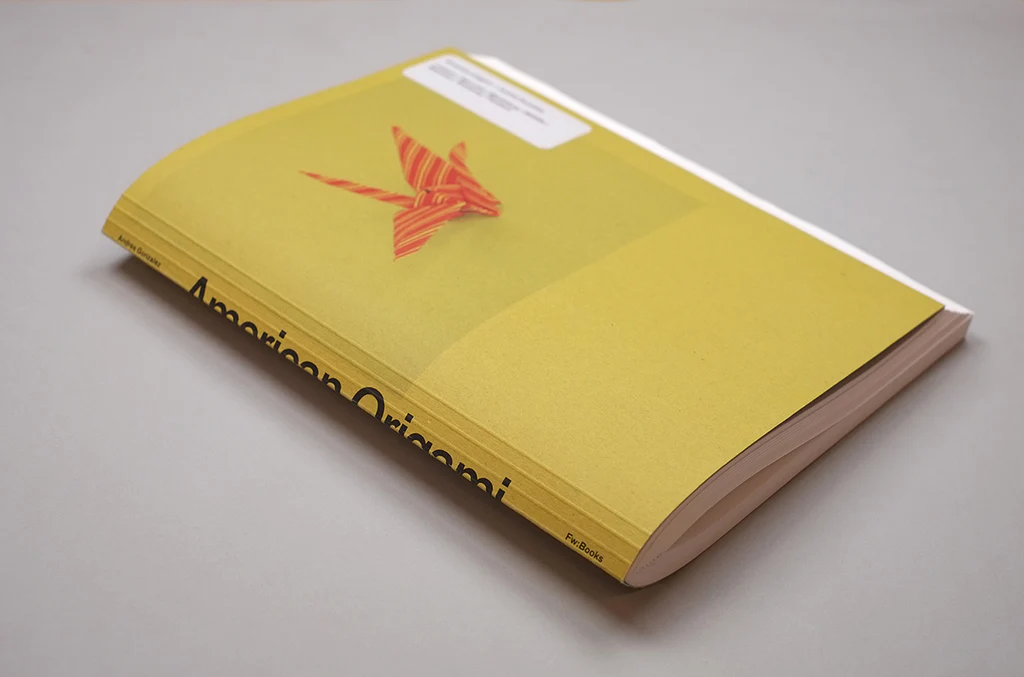
American Origami – Andres Gonzalez
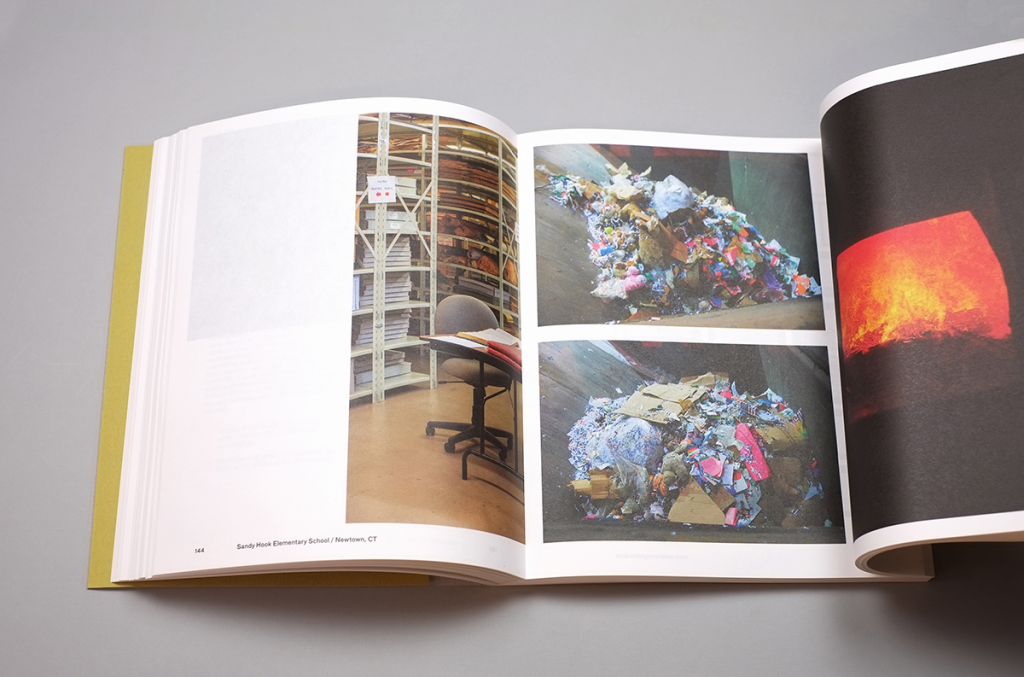
The idea of violence led me to this publication, American Origami. It is a publication documenting seven gunshots in the U.S. by compiling evidence from the cases: interviews, memoirs, letters, old photographs, screenshots from online discussions, and so on. What is most powerful about it is how it reveals violence through the formal concept of “fold.” These materials are folded into seemingly peaceful landscape photographs of the site where things happened, and origami birds made by those who experience the disasters. After unfolding these calm images, readers will encounter the content of death and trauma hidden inside. This intense contrast between the “peaceful exterior” and the “violent interior” is extremely impactful. The physical heaviness and thickness of the book itself also add a sense of emotional weightness. Rather than directly showing bloody scenes, the work makes “trauma and violence” visible through showing the remains, residues, and quietness left after violence. This made me think about how, within the context of my research, many forms of violence are hidden beneath peaceful and harmonious surfaces. They may be intentionally covered up, or simply remain unspoken and invisible. To represent violence does not necessarily mean directly showing violence itself; sometimes communicating it through seemingly harmonious or quiet forms can be even more powerful. Moreover, under conditions of censorship, this kind of calmness, concealment, and ambiguity can perhaps also function as a strategy to avoid direct exposure and restriction.
Temporary Censored Home – Guanyu Xu
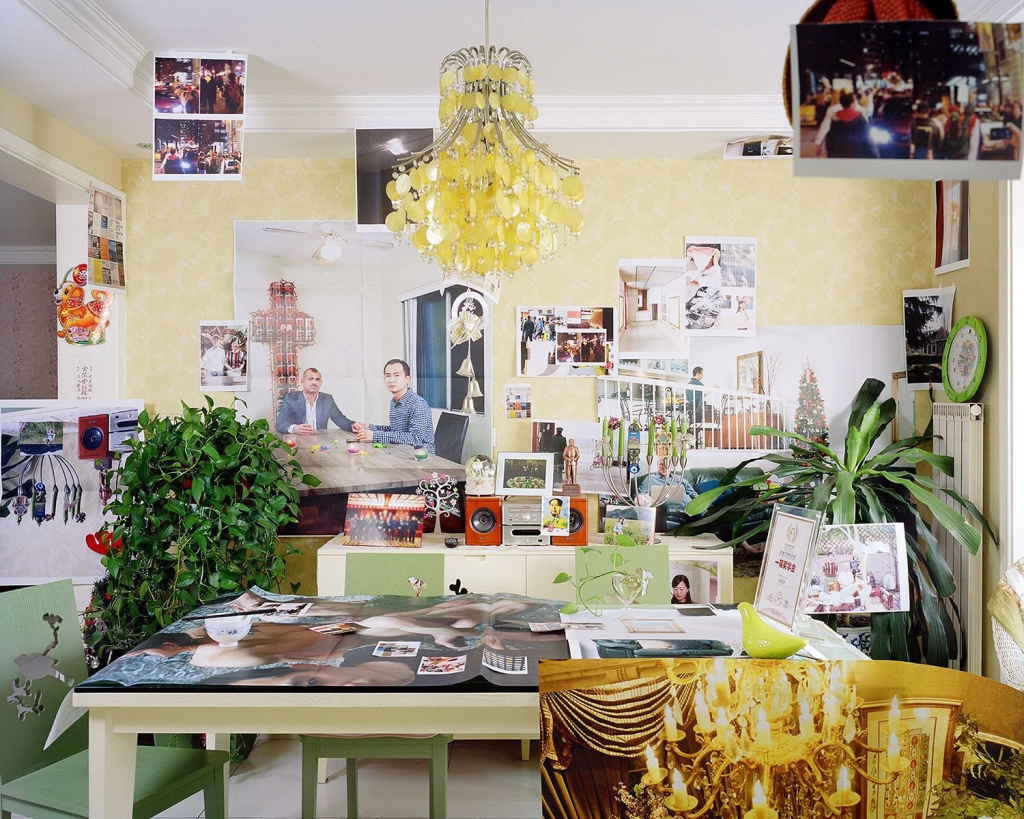
Guanyu Xu is a photographer from China whose work mainly explores queer identity. Although his work is highly personal and intimate, it is always reflecting broader social and political issues. In Temporary Censored Home, Xu installs and overlays his photographs within his parents’ home in China. Some of these body images are spread across, suspended on, and covering the surfaces of furniture and rooms. The existence of these body images is temporary, temporal, and ephemeral — they must be removed before his parents return home. At the same time, for viewers, because of the photographic perspective and obstruction, these images are almost invisible, existing in a state that is both exposed and hidden. This way of “showing while hiding” expresses a queer resistance and survival strategy that is always filled with vulnerability, contradiction, and complexity.
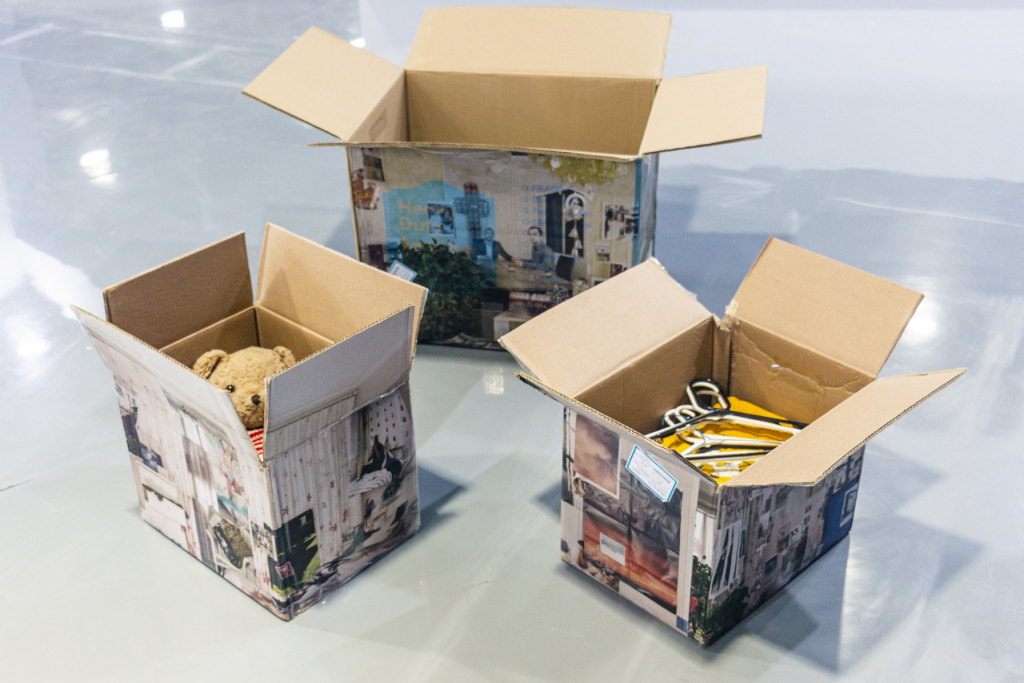
These photographic works were later banned from being exhibited in mainland China, and Xu eventually printed them onto cardboard boxes and mailed them back into China.
This made me feel that the image of the body here becomes a metaphor, vessel, and even extension of the body itself, while also functioning as a metaphor and carrier of identity, unfolding, existing, and moving across physical spaces and borders. In the absence of the “physical body,” images become what connects and carries identity, diasporic experience, and the complex and contradictory modes of survival under patriarchal systems.
- Steyerl, H. (2007) Lovely Andrea. Available at: https://ubu.com/film/steyerl_andrea.html
- Gonzalez, A. (2019) American Origami. Amsterdam: Fw:Books.
- Kane, A. (2022) ‘Photographer Guanyu Xu on queering his traditional Chinese family home’, Dazed, 28 June. Available at: https://www.dazeddigital.com/art-photography/article/56427/1/guanyu-xu-photographer-temporarily-censored-home-exhibition-china
Leave a Reply