According to the feedback I received from tutorial, I realized that if I continued with translating personal accounts into fables, the focus would shift more toward writing itself rather than design. I decided to focus on analyzing and organizing the interview content, with the goal of presenting them through a clear, accessible editorial design.
Over the past two weeks, the biggest challenge for me has been how to translate oral narratives into visual forms.
One difficulty was that all the interviews are anonymous, which made it hard to directly use photographs of the participants or visual materials closely related to them. At the same time, the interview content itself is also somewhat abstract—they are descriptions of personal feelings, critical reflections, and other “trains of thoughts” that do not have tangible forms. At first, I was thinking about using illustrations to represent the interview content. I extract elements mentioned in the interviews, such as objects, and illustrated them to use as visual hints of the interview content.
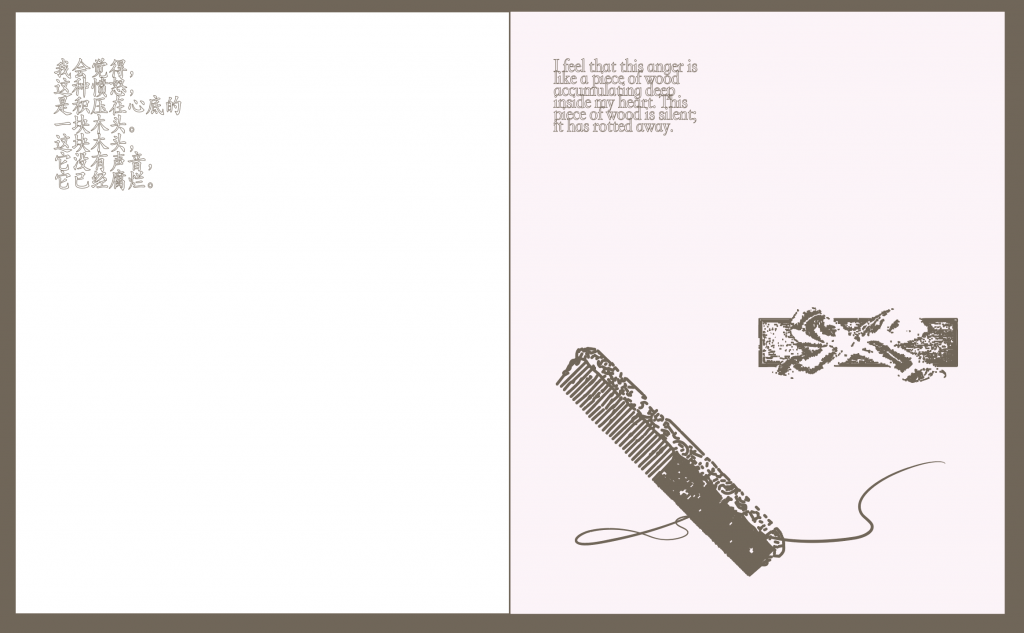
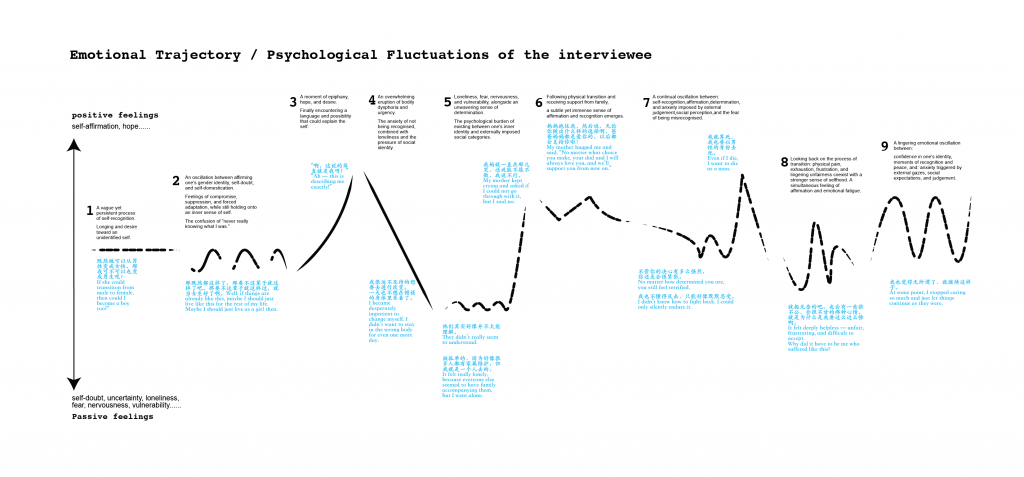
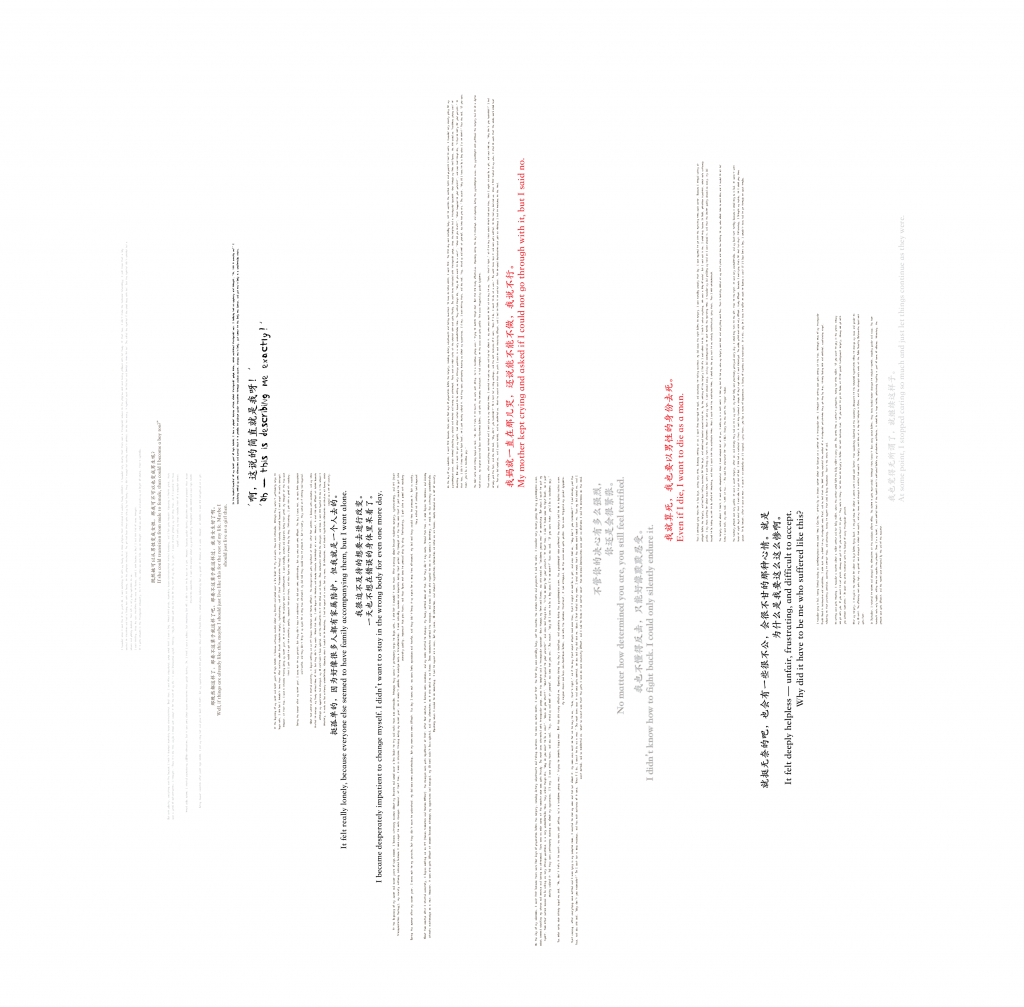
However, these illustrations felt more like “objects” and lacked personality or human presence. Also, I needed to think about how design could make visible the condition of repression, and the silencing of the voices. Therefore, I started thinking about visualizing the interviewees’ emotional and psychological movements. These movements are deeply intangible: fluctuations of emotion, hesitation, internal struggle, repression, anger, pain…… All sorts of complex feelings intertwined together. These psychological fluctuations are traces left by patriarchal discourse acting upon individuals over time. The indivisuals’ experiences are not allowed to be spoken out loud, therefore these complex feelings, as well as the structures producing them, often remain invisible and unrecognized.
I therefore began thinking how to visualize these emotional trajectories.
Because the project revolves around the concepts of “voices” and “speaking,” and because all of the interviews were conducted through spoken conversations and audio recordings, I began considering the use of audio waveforms as a form of visualization.
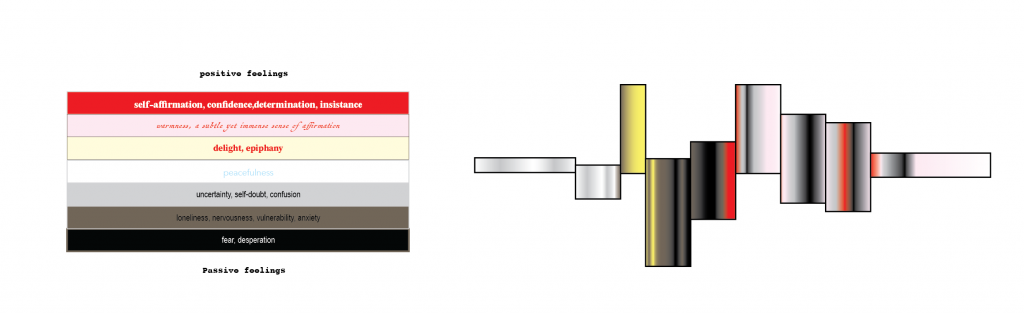
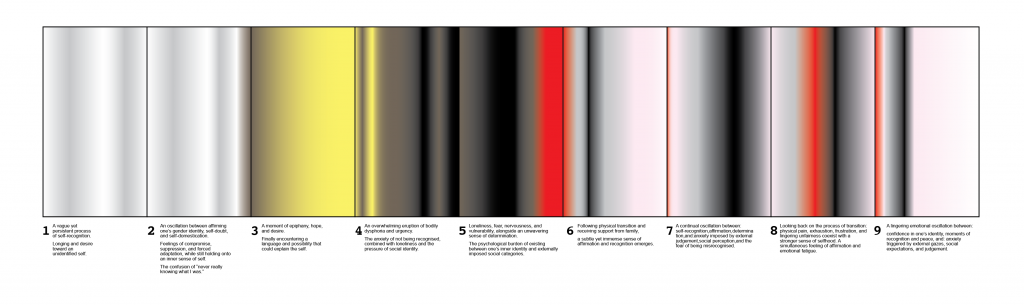
These waveforms could potentially function as a foundational visual language that could later be translated into layouts, typography, and even book structures, ultimately shaping the way the text itself is read and experienced.
Leave a Reply